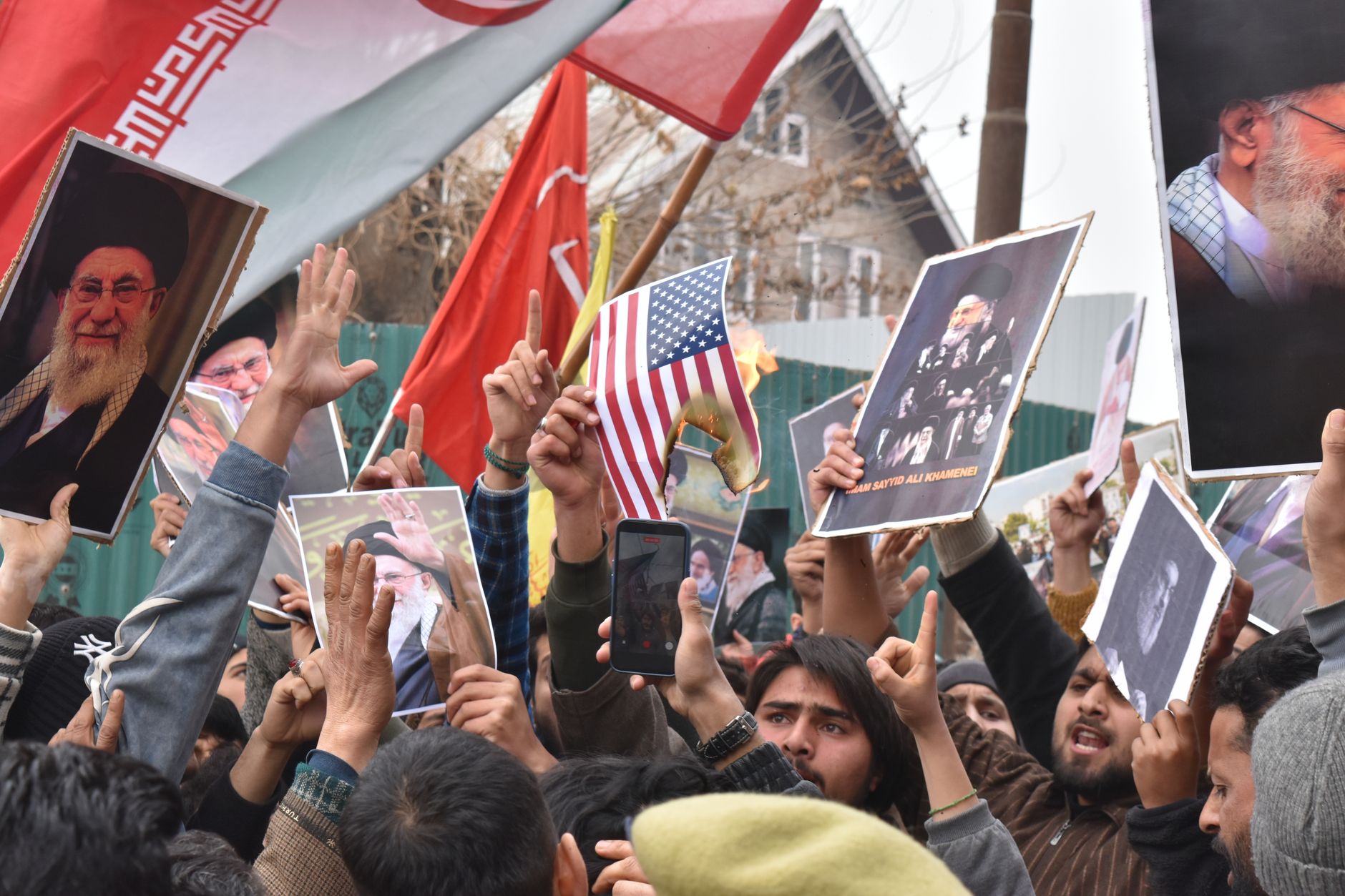
India finds itself in an increasingly delicate diplomatic position as tensions between Iran and the United States escalate, with Prime Minister Narendra Modi's government working to maintain productive relationships with both nations while protecting vital economic interests.
The challenge facing New Delhi stems from India's deep dependencies on both countries, making neutrality nearly impossible yet antagonizing either potentially catastrophic for the world's most populous nation and fifth-largest economy.
India's Strategic Interests in Iran
Iran represents more than just another trading partner for India. The Persian Gulf nation sits at the crossroads of critical trade routes and energy supplies that fuel India's economy. Historically, Iran has been a significant source of crude oil for India, particularly during periods when other suppliers became unreliable or prohibitively expensive.
Beyond energy, Iran provides India with strategic access to Afghanistan and Central Asia through the Chabahar Port project, which India has developed to bypass Pakistan and establish alternative trade corridors. This infrastructure investment represents billions of dollars and years of diplomatic capital that India cannot easily abandon.
The two nations also share cultural and historical ties dating back millennia, with significant people-to-people connections that influence foreign policy considerations beyond pure economic calculations.
The American Equation
Simultaneously, India's relationship with the United States has never been stronger or more consequential. The US-India strategic partnership encompasses defense cooperation, technology transfer, trade worth over 190 billion dollars annually, and shared concerns about China's regional ambitions.
The United States represents India's largest export market and a crucial source of advanced technology, particularly in defense, semiconductors, and aerospace. American sanctions on Iran have repeatedly forced India to curtail its Iranian oil imports, demonstrating Washington's ability to influence Indian policy through economic leverage.
The Quad alliance, bringing together India, the US, Japan, and Australia, reflects India's deepening integration into American-led regional security architecture, particularly as a counterweight to Chinese influence in the Indo-Pacific.
Economic Pressures Mounting
Regional conflict affects India's economy through multiple channels. Rising oil prices resulting from Middle Eastern instability directly impact India's import bill, widening trade deficits and putting pressure on the rupee. As an energy-importing nation dependent on stable global oil markets, any disruption in the Persian Gulf sends shockwaves through India's economy.
Shipping routes through the Strait of Hormuz, through which nearly one-third of the world's seaborne oil passes, become vulnerable during periods of heightened tension. Alternative routing adds costs and delays to Indian imports and exports, affecting everything from manufacturing inputs to consumer goods prices.
The Indian diaspora in the Gulf region, numbering in the millions, faces uncertainty during conflicts, with potential impacts on remittances that constitute a significant portion of India's foreign exchange earnings.
Walking the Diplomatic Tightrope
Modi's government has adopted several strategies to manage these competing pressures. India has diversified its energy imports, reducing dependence on any single supplier while maintaining some Iranian purchases when sanctions permit. New Delhi has invested in strategic petroleum reserves to buffer against supply disruptions.
Diplomatically, India has consistently advocated for dialogue and de-escalation while avoiding taking explicit sides in conflicts. This position allows India to maintain working relationships with adversaries, though it sometimes frustrates partners expecting stronger alignment.
India has also accelerated its renewable energy transition, partly to reduce vulnerability to Middle Eastern volatility, though fossil fuels will remain critical for decades.
Looking Forward
The balancing act grows more difficult as global polarization intensifies and nations face pressure to choose sides. India's traditional non-aligned stance, inherited from its Cold War-era foreign policy, provides philosophical justification for maintaining independence, but modern economic interdependence makes pure neutrality increasingly untenable.
Modi's challenge involves protecting immediate economic interests while building long-term strategic resilience. Success requires skillful diplomacy, economic diversification, and occasionally accepting short-term costs to preserve long-term flexibility.
As regional tensions continue, India's ability to navigate between Tehran and Washington while safeguarding its economic growth will test the Modi government's diplomatic capabilities and shape India's role in an increasingly multipolar world order.